Bangladesh, Malaysia agree to review labour pact

- সর্বশেষ আপডেট: সোমবার, ২২ জুন, ২০২৬
Bangladesh and Malaysia have reached a policy-level consensus to review their existing labour cooperation agreement and formulate an updated framework aimed at making labour migration more effective, sustainable, and transparent.
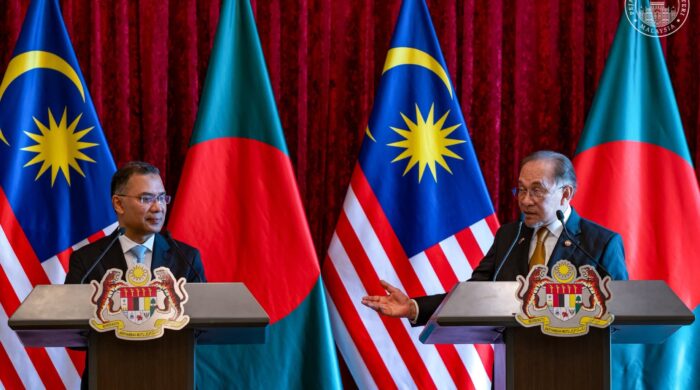
The decision was made during bilateral talks between the two countries held in Putrajaya, where the leaders placed special emphasis on ensuring safe, regular and transparent migration of workers.
According to a joint statement issued after the meeting, both sides agreed to review the labour cooperation Memorandum of Understanding (MoU) signed in 2021 and prepare a new draft agreement in line with current realities and requirements.
The two leaders acknowledged the importance of people-to-people connectivity and appreciated the valuable contribution of Bangladeshi workers to Malaysia’s development.
They also recognised the role of the Bangladeshi diaspora in strengthening bilateral exchanges and promoting shared economic activities between the two nations.
During the bilateral discussions, Bangladesh Prime Minister Tarique Rahman urged Malaysia to reopen its labour market for Bangladeshi workers at the earliest opportunity and increase the recruitment of workers from Bangladesh.
He also raised the issues of regularisation of undocumented Bangladeshi workers and the possible repatriation of detained Bangladeshi nationals.
Speaking at a joint press conference following the talks, Tarique reiterated Bangladesh’s commitment to promoting safe and orderly migration and called for closer cooperation to address existing challenges in the labour sector.
The joint statement noted that Malaysia viewed Bangladesh’s proposals on labour recruitment positively.
However, Malaysia clarified that under its current policy, new quotas for foreign workers would no longer be opened in an unrestricted manner. Instead, approvals would be granted on a case-by-case basis, considering the genuine demand of employers and the needs of relevant sectors.
For Bangladeshi workers, the positive development is that recruitment under approved quotas will be conducted in a transparent, fair, non-discriminatory and competitive manner.
The two countries also agreed that workers would be recruited only through qualified and credible recruiting agencies.