Rohingya face growing hostility in Malaysia amid rising anti-refugee sentiment

- সর্বশেষ আপডেট: শুক্রবার, ২৮ আগস্ট, ২০২৬
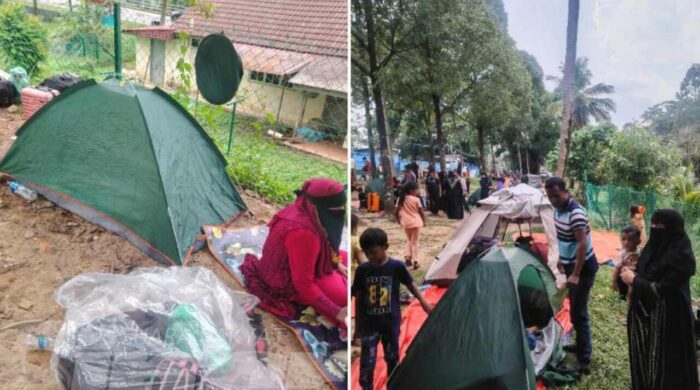
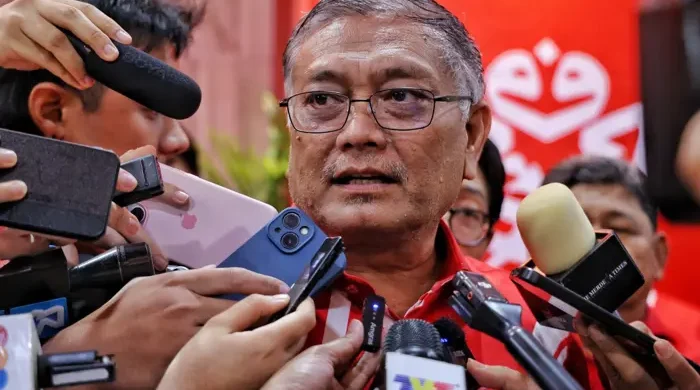
Rohingya refugees in Malaysia are facing a fresh wave of hostility, with community schools raided, families evicted and refugees increasingly targeted by anti-Rohingya rhetoric on social media and by public figures.
The growing hostility marks a sharp shift for a community that once viewed Muslim-majority Malaysia as a relatively safe haven after fleeing persecution and violence in Myanmar.
“Going to school has become a dangerous thing,” said Irhan, a Rohingya refugee who founded a community school in northern Malaysia for children aged six to 15.
Rohingya children are barred from Malaysia’s public education system and often rely on community-run learning centres. But those centres have increasingly become vulnerable to official action and public pressure.
Irhan said eight uniformed police officers raided his school last month, photographed students and ordered some children to return home.
“The students are just here to learn. Now their families are afraid,” he said.
Another Rohingya-run school in Selangor suspended classes for a month after concerns over attacks and reopened with tighter precautions. Students were instructed not to wear uniforms and to leave immediately after classes.
The uncertainty has prompted some community schools to close temporarily, while Rohingya families in some areas have reportedly been forced out of villages where they had lived for years.
Last month, around 120 Rohingya refugees, more than half of them children, sought shelter outside the UN refugee agency’s office in Kuala Lumpur after being evicted from a fishing village near Penang. They were subsequently detained temporarily.
The UN refugee agency estimates that more than 126,000 Rohingya are living in Malaysia, making it the second-largest host country for Rohingya refugees after Bangladesh. Rights groups, however, believe the actual number may be considerably higher.
Malaysia has never formally recognised asylum seekers, leaving refugees without legal rights to employment, education and housing. Nevertheless, the country had long been viewed by Rohingya as a comparatively secure destination.
That perception began changing during the COVID-19 pandemic, when Rohingya were accused of spreading the virus and competing with Malaysians for jobs. Calls for their deportation spread widely online.
Anti-Rohingya sentiment has intensified again this year.
In May, social media posts accusing Rohingya refugees of improperly disposing of animals sacrificed during Eid al-Adha went viral. The posts were followed by broader, unfounded claims that Rohingya were seeking automatic citizenship, political influence and even attempting to “take over” Malaysia.
An online petition demanding the removal of Rohingya refugees from Malaysia reportedly attracted more than 420,000 signatures before being taken down following criticism from rights groups.
The deteriorating situation has also been reflected in public statements.
Prime Minister Anwar Ibrahim said during a campaign speech in July that Myanmar had agreed to take back 5,000 Rohingya refugees from Malaysia, citing the two countries’ “good relations.”
He also warned Rohingya not to disrupt the lives of Malaysians, saying, “This is our country. Malaysia is our country.”
The remarks came amid increasingly harsh comments from other public figures. Nurulhidayah Zahid, daughter of Deputy Prime Minister Ahmad Zahid Hamidi, compared Rohingya refugees to “monkeys in the forest” in a social media post, while former deputy police chief Ayob Khan Mydin Pitchay described the influx of Rohingya as a “cancer” requiring urgent action.
Human rights researchers fear the hostility could worsen as Malaysia approaches its next general election, which must be held before February 2028.
“Refugees and migrants are once again being turned into convenient political scapegoats to divert attention from deeper domestic challenges,” said Yap Lay Sheng, a researcher with Fortify Rights.
The Rohingya crisis is rooted in decades of persecution in Myanmar, where the predominantly Buddhist state has denied the Muslim minority citizenship and repeatedly characterised them as illegal migrants.
The largest exodus occurred after a brutal military crackdown in August 2017, when more than a million Rohingya fled to Bangladesh amid killings, sexual violence and the burning of villages. The UN described the campaign as “textbook ethnic cleansing,” while the United States under the Biden administration determined that the atrocities constituted genocide.
The situation in Myanmar remains precarious. Rakhine State, the Rohingya homeland, has suffered extensive destruction amid fighting between the military regime and the Arakan Army, making safe and voluntary return increasingly difficult.
Malaysia’s worsening attitude has therefore left many Rohingya refugees with few options.
“I would leave if I could, but where else can I go? We are not wanted anywhere,” Irhan said.
For those running community schools, the immediate concern is less about politics than the future of their children.
“I hope the Malaysians can understand that the children just want an opportunity to learn,” Irhan said.